Why the Right Treatment Depends on the Type of Stain
Walk into any grocery store and you'll find a wall of carpet spot removers, each one claiming to tackle "all stains." In reality, carpet stains fall into four fundamentally different chemical categories—and the wrong treatment doesn't just fail to work, it can permanently set the stain or damage the carpet fiber itself.
Understanding stain chemistry is the foundation of professional carpet stain and spot removal. At Finest Bera Carpet Cleaning, we identify a stain's composition before selecting any spotting agent, because applying the wrong chemistry to the wrong stain type is one of the most common reasons stains become permanent.
The Four Categories of Carpet Stains
1. Tannin-Based Stains
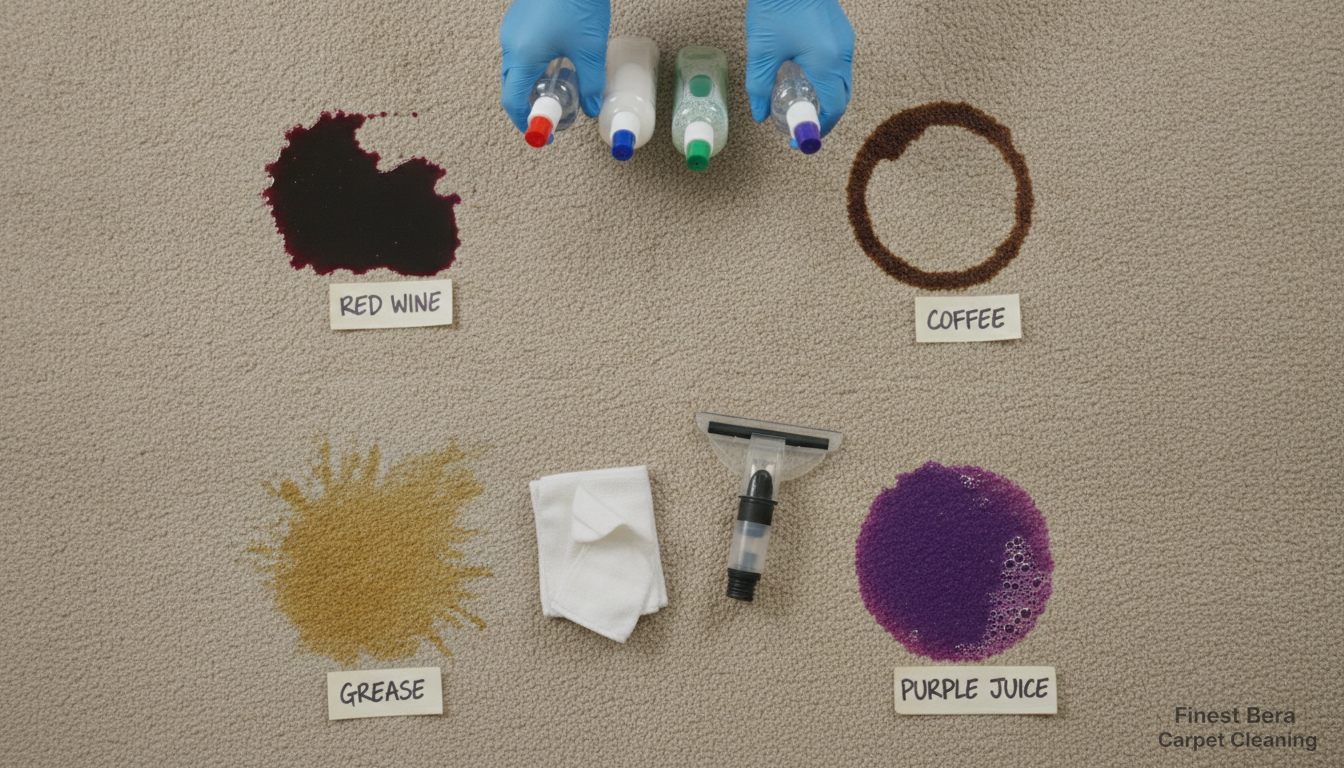
Wine, coffee, tea, beer, and fruit juices are all tannin-based. These water-soluble stains are among the most common in Brea homes and respond well to alkaline spotting agents—but only if treated before they dry and oxidize. Heat from home steam cleaners can accelerate the oxidation process and brown the fibers around a tannin stain permanently. Never use hot water on a fresh wine or coffee spill.
2. Protein-Based Stains
Blood, egg, dairy, vomit, and some food sauces are protein-based. Cold water is critical here—hot water coagulates proteins and bonds them to carpet fibers the way heat bonds egg white to a pan. If you've ever tried to clean up a blood stain with hot water, you've likely experienced this firsthand. Enzyme-based spotting agents that digest proteins are the correct professional treatment.
3. Oil-Based Stains
Grease, cooking oil, butter, makeup, sunscreen, and motor oil (tracked in from the garage) are oil-based. These repel water and require a dry-solvent or citrus-based degreaser to break the oil's bond with the fiber. Water alone will not move an oil stain—it will only spread it wider.
4. Synthetic Dye Stains
Juice drinks, sports drinks, markers, and certain candies contain artificial dyes that bond directly to carpet fibers in a process similar to how fabric dye works in a textile mill. These are among the most difficult stains to fully remove. Professional-grade reducing agents can sometimes reverse dye bonding, but results depend heavily on how long the dye has been in contact with the fiber and whether heat has been applied. This is why professional intervention is especially important for dye-based stains.
What to Do Immediately After a Spill
- Blot, never scrub. Scrubbing spreads the stain laterally and pushes it deeper into the pile. Use a clean white cloth or paper towels and press firmly, working from the outside edge of the spill toward the center.
- Remove as much liquid as possible first. Before applying any treatment, absorb as much of the spill as you can. For thick substances like pet vomit or food, scoop up solids with a spoon before blotting.
- Avoid hot water. Cold or lukewarm water is safer for most stain types during the first-response phase.
- Do not apply bleach. Household bleach will destroy carpet dye and leave a permanent white or yellow spot. Even "oxygen bleach" products can cause color loss on many carpet types.
- Call a professional promptly for dye or large-area stains. The longer an artificial dye sits, the more completely it bonds. For stains covering more than a few square inches, professional extraction will be far more effective than any store-bought spray.
When DIY Spot Treatment Is Making Things Worse
There are several warning signs that a stain has been DIY-treated in a way that's complicating professional removal:
- A visible ring or halo around the original stain (caused by soap residue wicking soil to the outer edge as the spot dries)
- A lighter or discolored patch in the carpet pile (caused by bleaching agents or improper chemistry)
- Stiff or crunchy-feeling fibers at the stain site (caused by soap residue left behind after treatment)
- A stain that keeps reappearing after cleaning (caused by soil wicking back up from deep in the pile—a sign the stain was not fully extracted)
If any of these describe your current situation, don't apply more product. Call our team instead—we have color correction and fiber grooming techniques that can often recover the appearance of improperly treated areas.
How Professional Stain Removal Works
Our stain removal process at Finest Bera Carpet Cleaning starts with identifying the stain type, then applying the correct spotting chemistry and allowing it to dwell. Gentle agitation with a pro-grade brush, controlled heat where appropriate, and a high-powered spot extractor flush the broken-down stain material from the base of the pile. A final rinse and dry stroke restore the carpet's nap, leaving treated areas consistent with the surrounding carpet.
For pet accident areas, we pair stain removal with our enzyme odor treatment to address both the visible stain and the underlying biological contamination simultaneously. And if you have area rugs with staining, our area rug cleaning service uses fiber-appropriate chemistry that won't damage delicate wool or hand-knotted construction.
Stain Removal Service Throughout the Brea Area
Finest Bera Carpet Cleaning serves homeowners across Brea and the surrounding region. Our technicians provide professional carpet stain removal in Fullerton, La Habra, Rowland Heights, La Habra Heights, and throughout northeastern Orange County.
No stain is too stubborn to evaluate. We provide honest upfront assessments—we'll tell you exactly what results are realistic before we begin any work. Call us at +1 (657) 534-5333 any day of the week between 8:00 AM and 6:00 PM, or visit our stain removal service page to schedule your appointment.
Need Service?
Call +16575345333 or fill out our online form for a free, no-obligation quote.
Request Free Quote